
How Much Does a Cow Weigh? Your Ultimate Guide to Weights and Meat Yields
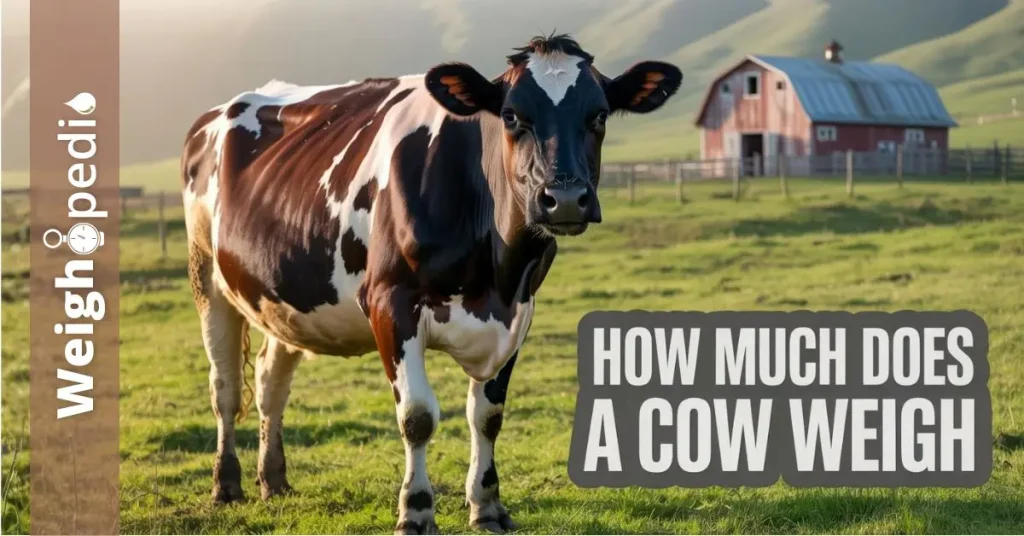
An average weight of a cow is in between 1200lbs and 1500lbs (approximately 544kg – 680kg), although the average cow weight is different depending on cow breed and age.
Key Takeaways
Cows are most iconic among the farm animals, but their size can vary significantly based on several factors. As a farmer, a weekend hobbyist, or just someone curious about livestock, knowing how to work out cow weights is important to everything from herd maintenance to gauging meat output.
In this guide, we will explore average cow weights in pounds and kilograms, breaking it down by type, breed, and influencing factors.
This article is written based on the latest agricultural data as of 2025, including statistics from USDA reports and breed-specific studies, to provide accurate, trustworthy information. If you are wondering about variations in weight or how to calculate yields for your freezer, we have your back—helping overcome common issues like uncertainty in buying bulk beef or assessing cow nutrition.
How Much Do Cows Weigh on Average?
The average weight of a cow, especially mature cow weighs between 1,200 and 1,500 pounds (544 to 680 kg), but this can fluctuate based on breed, diet, and other factors.
For seven of the most popular breeds, the average is around 1,400 pounds (635 kg). Bulls (males) tend to be heavier, often exceeding 2,000 pounds (907 kg), while cows (females) are lighter. (A-Z Animals)
The heaviest breed, Chianina, can reach up to 3,500 pounds (1,588 kg) due to their large frame and efficient metabolism. On the smaller end, the Vechur breed averages about 300 pounds (136 kg), ideal for low-maintenance farming.
Miniature breeds like Mini Highland cows weigh 500 to 1,000 pounds (227 to 454 kg) and are popular as pets
According to latest USDA data , there are 86.7 million cattle in the U.S., with average slaughter weights of about 1,400 pounds (635 kg), which reflects continued trends in efficient breeding.
Stats…
According to the Wikipedia, Donetto, a Chianina, had the largest ever measured bull globally, being 1,740 kg (3,840 lb) exhibited at the Arezzo 1955.
Curious how a cow’s weight stacks up against everyday items? Check out our article on things that weigh 50 pounds for some fun and surprising comparisons — it will give you a better sense of just how massive these animals really are!
How to Calculate Cow Weight in KG + LBS
The cow weight can be calculated by taking the measurements in inches (Heart Girth and Body Length). The below cow weight calculator provides an estimated range based on common livestock data from USDA and agricultural extensions.
Cow Weight Calculator
Calculated using the standard livestock formula:
(Girth² × Length) ÷ 300
For other livestock, use the horse weight calculator to estimate their weight.
How Much Does a Calf Weigh on Average?
Young bovines under two years old, known as calves, begin small and grow quickly. The majority are born between 65 and 90 pounds (29 and 41 kg) after a gestation of 285 days, or roughly nine months; bull calves are usually heavier than heifers.
Birth weights vary by breed: For example, Holstein calves average 82-143 pounds (37-65 kg) in their first month, while Jersey calves are lighter at 93-108 pounds (42-49 kg). Angus calves often birth at 72-90 pounds (33-41 kg). (AG Tech Folio3)
Growth table for popular breeds from birth to 12 months (averages in pounds and kg):
|
Breed |
Month 1 |
Month 3 |
Month 6 |
Month 9 |
Month 12 |
|---|---|---|---|---|---|
|
Holstein |
82-143 lbs |
149-284 lbs |
266-480 lbs |
379-705 lbs |
504-843 lbs |
|
Jersey |
93-108 lbs |
155-177 lbs |
259-321 lbs |
373-436 lbs |
471-548 lbs |
|
Ayrshire |
131-154 lbs |
223-256 lbs |
360-407 lbs |
494-554 lbs |
624-697 lbs |
|
Angus |
72-90 lbs |
Varies; |
~400-500 lbs |
~600-700 lbs |
~800-900 lbs |
Monitoring calf weights helps farmers address common issues like low birth weights, which could indicate nutritional issues in the cow.
How Heavy a Dairy Cow on Average?
Dairy cows are bred for milk production, so they are generally lighter than beef cows to prioritize efficiency. Average weights range from 800 to 1,700 pounds nearly around 2 tons (363 to 771 kg), with Holsteins being the heaviest at 1,500-1,700 pounds (680-771 kg) for females.
Dairy cows are bred for milk production, so they’re generally lighter than beef cows to prioritize efficiency. Average weights range from 800 to 1,700 pounds (363 to 771 kg), with Holsteins being the heaviest at 1,500-1,700 pounds (680-771 kg) for females.
Table of popular dairy breeds:
|
Breed |
Male Weight (lbs/kg) |
Female Weight (lbs/kg) |
|---|---|---|
|
Holstein |
1,200-1,400 (545-635) |
1,500-1,700 (680-771) |
|
Jersey |
1,300-1,500 (590-680) |
800-900 (363-408) |
|
Brown Swiss |
Up to 2,000 (907) |
1,300-1,400 (590-635) |
|
Guernsey |
1,300-1,500 (590-680) |
1,000-1,100 (454-499) |
|
Ayrshire |
1,400-1,984 (635-900) |
990-1,320 (449-599) |
|
Shorthorn |
2,200-2,400 (998-1,089) |
1,400-1,600 (635-726) |
Dairy cows require balanced nutrition to maintain weight without compromising milk output, addressing user concerns about herd health.
How Much Does a Beef Cow Weigh on Average?
Beef cows are bred for meat, making them heavier with more muscle. Averages range from 1150 to 2500 pounds (522 to 1,134 kg), with Angus females at 1150 – 1250 pounds (522 – 567 kg).
In 2021, the United States led the world in beef and veal production, turning out an impressive 12.6 million metric tons. That makes the U.S. the top producer globally—no other country comes close when it comes to putting beef on the table. (Statista)
Table of popular beef breeds:
|
Breed |
Male Weight (lbs/kg) |
Female Weight (lbs/kg) |
|---|---|---|
|
Black Angus |
1,850-2,300 (839-1,043) |
1,150-1,250 (522-567) |
|
Charolais |
2,204-3,638 (1,000-1,650) |
1,543-2,646 (700-1,200) |
|
Hereford |
1,800-1,874 (816-850) |
1,191-1,323 (540-600) |
|
Simmental |
2,315-2,865 (1,050-1,300) |
1,545-1,985 (700-900) |
|
Texas Longhorn |
1,200-1,500 (544-680) |
900-1,200 (408-544) |
|
Highland |
1,500-2,000 (680-907) |
900-1,200 (408-544) |
The weights of beef cows are essential for calculating yields and market value.
Stats…
According to the World Population Review, In 2020, Americans consumed nearly 27.6 billion pounds (12.5 billion kilograms), or 21% of the world’s beef. In 2020, the United States ranked third in terms of supply, behind Argentina and Zimbabwe, with an annual per capita consumption of just 83.48 pounds (37.87 kilograms).

What Factors Influence How Much a Cow Weight?
Cow weight fluctuates due to a variety of factors. Understanding these helps overcome issues like unexpected weight loss in herds.
Age
Cow grow dramatically from birth, with newborn calves to reaching market weights of 1,200–1,400 pounds in just 14–18 months under optimal conditions. According to Penn State Extension, in high-performance systems, they can gain up to 4.5 pounds (about 2 kg) per day, though full adult size varying widely by breed—typically develops over 2–3 years or longer for breeding animals.
Gender
Male cattle generally outweigh females due to greater muscle mass, thicker bones, broader heads, and a higher proportion of lean tissue relative to fat. In many breeds, mature bulls (intact males) can reach 1800–2500 pounds or more, often surpassing steers (castrated males) by 50–200+ pounds at similar ages, as castration reduces testosterone-driven muscle growth and promotes earlier fat deposition. Among males, beef breeds (like Angus or Charolais) tend to produce larger, heavier individuals than dairy breeds (such as Holsteins)
Breed
The body weight of cow varies significantly depending on their breed. Miniature or small breeds, such as certain Zebu or Dexter types, can weigh as little as around 300–600 pounds (or even lower in some extreme cases for the tiniest varieties), while large draft breeds like the Chianina, historically developed for heavy pulling work which often exceed 3,000 pounds, with mature bulls sometimes reaching 3,500 pounds or more.
Diet
Cow weight is heavily influenced by diet: high energy grain based feeds like corn, barley, oats, and soybean meal provide dense calories and nutrients, enabling faster growth, higher daily weight gains (often 2.5 to 4+ pounds), and greater overall body mass with more fat deposition compared to a natural grass or forage-only diet. Pasture-raised cow on lower-energy grasses grow more slowly (typically 1–2 pounds per day), resulting in leaner animals that take longer to reach market weight, often with less intramuscular fat but potentially higher omega-3 content in the meat.
Activity Level
Cows grazing freely across expansive pastures expend extra energy through constant movement, foraging, and walking to water sources, which helps them maintain a leaner physique compared to confined cattle in feedlots that expend far less effort and gain weight more rapidly.
How Much Meat Does a Cow Give?
A 1,200-pound (544 kg) cow yields about 750 pounds (340 kg) of carcass, or 62.5% edible meat after processing. Take-home cuts are 55-75% of carcass, depending on boning.
Breakdown for a 1,200 lb cow (carcass 750 lbs):
- Chuck: 29% (217 lbs / 98 kg)
- Round: 22% (165 lbs / 75 kg)
- Loin: 16% (120 lbs / 54 kg)
- Rib: 9% (68 lbs / 31 kg)
- Plate: 9% (68 lbs / 31 kg)
- Flank: 5% (38 lbs / 17 kg)
- Brisket: 4% (30 lbs / 14 kg)
- Shank: 3% (23 lbs / 10 kg)
Hanging weight is 60-64% of live; take-home ~60% of hanging. (Livestock Division of Extension)
Amount of Beef You’ll Get for Your Freezer
For bulk buys, a quarter beef has an average hanging weight of 187-190 pounds (85-86 kg), yielding ~130 pounds (59 kg) take-home. Half: 260 pounds (118 kg). This addresses uncertainty in portion sizes.
Freezer Space Needed
Plan for 35 pounds (16 kg) per cubic foot. A quarter (~130 lbs) needs 4-5 cubic feet; half needs 8-10. Compact organization helps maximize space.
All Our 1/4s and 1/2s Are “Split”
In fair sharing, “split” quarters include cuts from front and back for variety (steaks, roasts, ground). This ensures balanced portions without bias.
Cost Is Simple
As of 2025, expect $900-1,200 for a quarter (farm price), plus $0.95-1.10/lb hanging for processing (~$180/quarter). Check local farms for exacts—prices vary by region and grass-fed status.
Conclusion
The average weight of a cow is approximately 1200 to 1500 pounds (544 to 680 kg), although this varies greatly depending on breed, age, and purpose. Regular monitoring guarantees the best possible health and productivity, whether it is for dairy, beef, or meat output.
Common problems like calculating freezer requirements or comprehending yields are solved with the help of this guide. For more information please visit us at Weighopedia.
Frequently Asked Questions
How heavy is a cow in kg?
The cow weighs 544 to 680 kg on average; however the weigh varies by breed and age.
How much meat do you get out of a 1200-pound cow?
From a cow weighs 1200 pounds, you can have approx 450-500 pounds (204-227 kg) of meat.
How much does a cow weigh at slaughter?
According to the USDA, the average cow weigh at slaughter are around 1371 pounds (621 kg) live; 840 pounds (381 kg) cooled carcass.
How much does a wagyu cow weigh?
A full-grown Wagyu cow typically weighs 1,200 to 1,600 pounds (540 to 730 kg), depending on age, diet, and breeding conditions. Wagyu cattle are generally smaller than some commercial beef breeds, but they develop more intramuscular fat (marbling), which is what makes their beef so valuable. Mature Wagyu bulls can be heavier, often reaching 1,700 to 2,000 pounds (770 to 900 kg).
How much does a miniature cow weigh?
A miniature cow usually weighs 500 to 800 pounds (225 to 360 kg) when fully grown. Some smaller breeds and types may weigh as little as 300 pounds (135 kg), while larger miniature varieties can reach up to 1,000 pounds (450 kg). Their weight depends on breed, diet, and care, but they are significantly lighter and easier to manage than standard-sized cattle.